
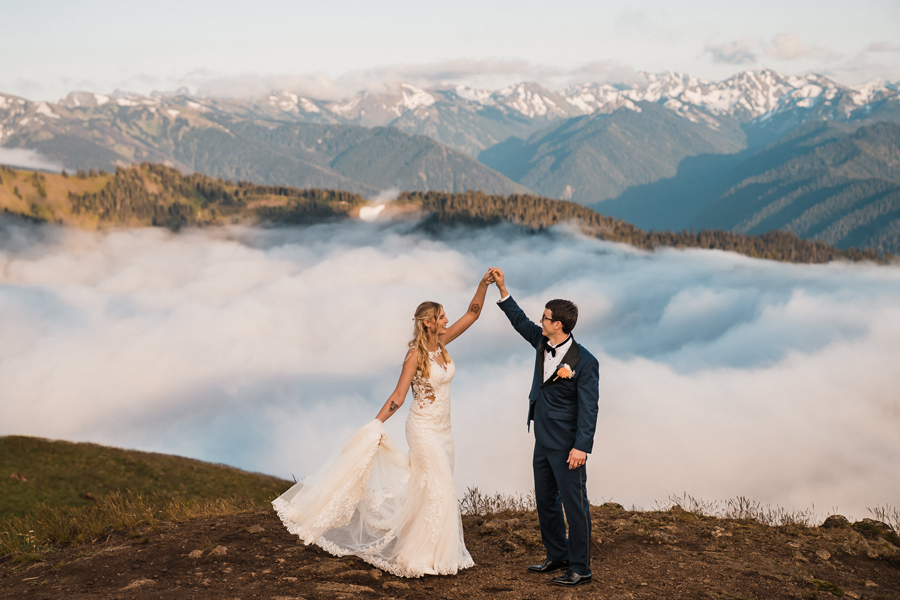
One of the first questions couples ask me when they start planning an Olympic National Park elopement is: When is the best time of year to get married there?
And the answer might surprise you. There really isn’t one “best” month.
One major benefit of Olympic National Park is that it’s a year-round destination, but your experience here can look completely different depending on when you visit. Summer can mean long days hiking through wildflower-filled mountains. Winter can give you snow at Hurricane Ridge and dripping green moss in the rainforest on the very same trip. Spring brings rushing waterfalls and fresh greenery, while fall trades our busiest summer days for changing colors, cooler temperatures, and moodier weather.
I’ve spent years exploring and photographing Olympic in every season, and I genuinely love something different about each one. The trick is choosing the season that matches the experience you want to have. So let’s break it down.
Can You Elope in Olympic National Park Year-Round?
Absolutely! Olympic National Park is open year-round, and there are beautiful places to explore during every season. That doesn’t mean every location within the park is accessible all year, though. Weather here is incredibly variable, and because Olympic includes everything from Pacific coastline to temperate rainforest to mountains more than a mile above sea level, conditions can be completely different in different parts of the park on the same day.
That’s actually one of the things I love most about planning elopements here. There are so many different landscapes to work with. The biggest seasonal differences come down to mountain access, weather, daylight, crowds, and what kind of adventure you want to have.

Spring Elopements in Olympic National Park – March through May
What Spring is Like
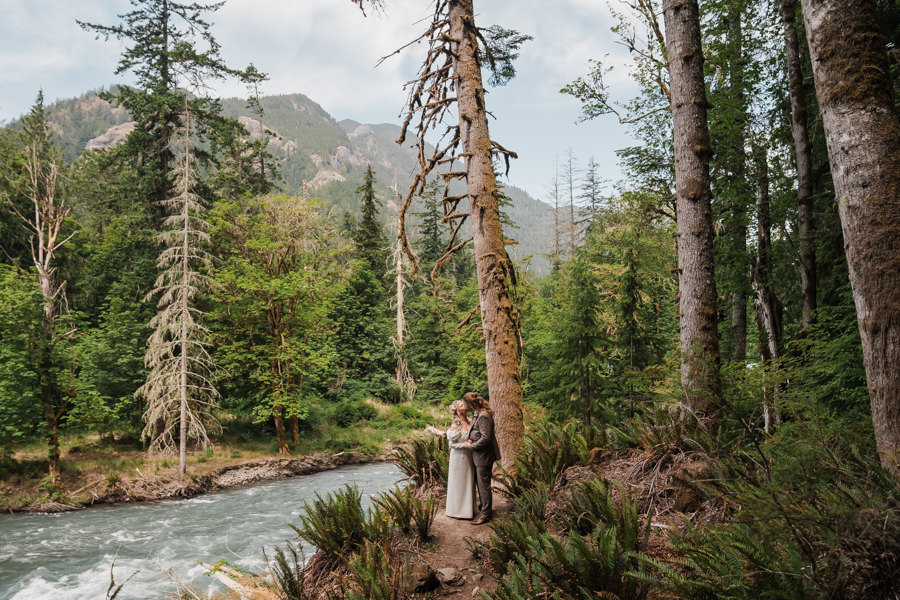
Spring is one of the most interesting transitional seasons in Olympic. Down at lower elevations, everything is waking up. The forests are intensely green, moss is everywhere, rivers and waterfalls are flowing, and you start getting those occasional gorgeous sunny days that make it feel like summer is right around the corner.
Up in the mountains, however, it can still very much be winter. Snow and heavy rain can continue into June at higher elevations, and many alpine trails remain snow-covered or inaccessible well into spring. That contrast can be pretty incredible if you want to experience more than one side of Olympic during your elopement.
Best Spring Landscapes
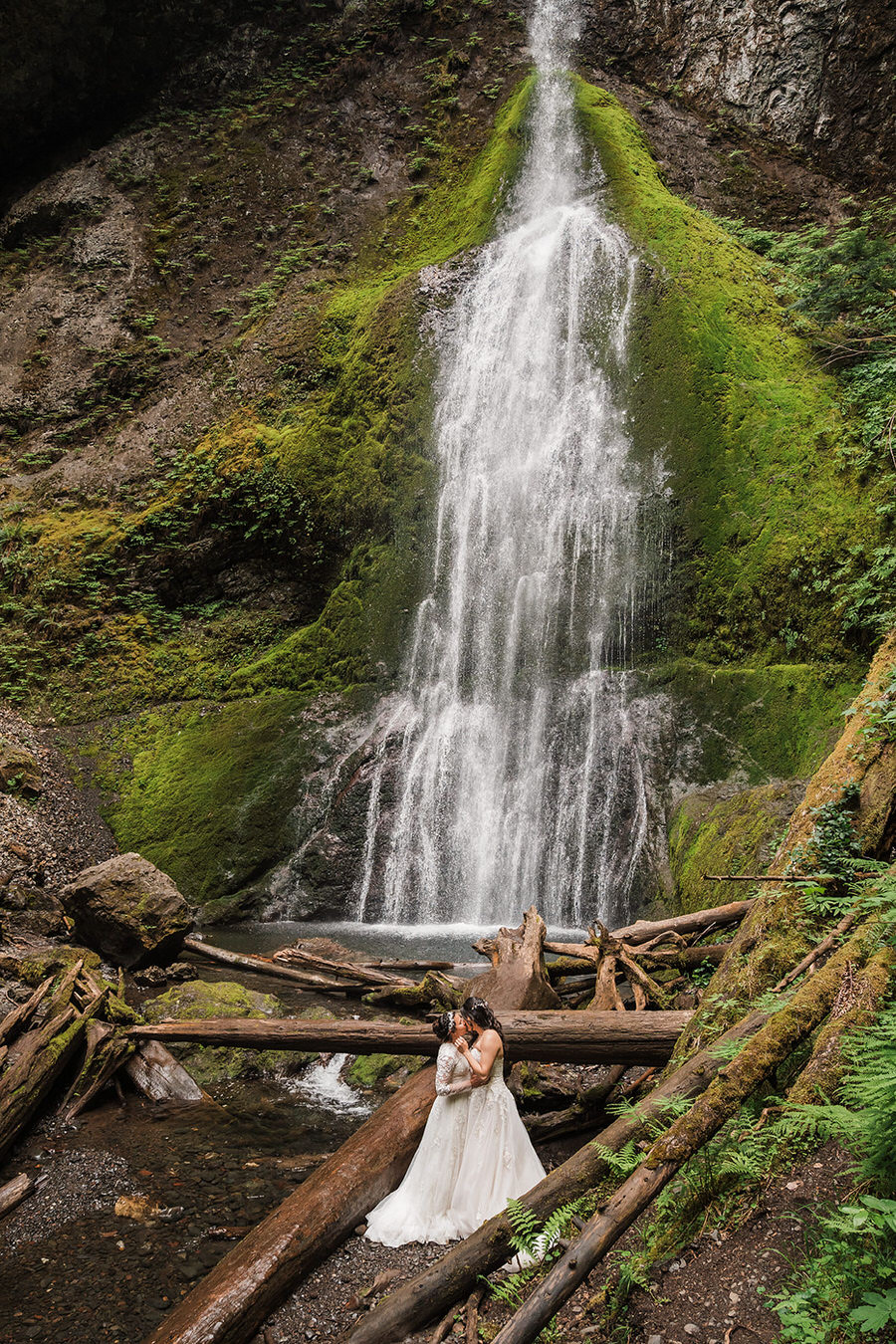
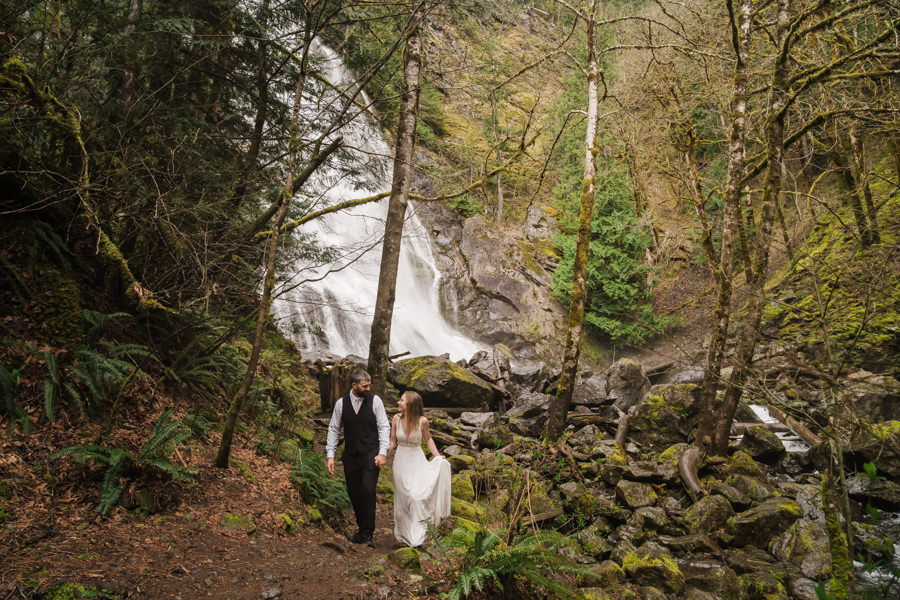
Spring is especially good for Lake Crescent, waterfalls, mossy forests, river valleys, and the rainforest. It’s one of my favorite times for couples who picture their wedding surrounded by that lush, saturated PNW green. Depending on conditions and access, you may also be able to incorporate snow into your day at higher elevations.
Spring Weather
Expect a little bit of everything. You could get sunshine, rain, fog, or even snow depending on where you are in the park. Spring temperatures tend to be cool to mild at lower elevations, while higher elevations can remain snowy. This is definitely a season when flexibility pays off.
Spring Pros and Cons
The biggest advantages are lush landscapes, beautiful waterfalls, fewer crowds than peak summer, and the possibility of experiencing both green forests and snowy mountains. The tradeoff is unpredictability. If you have your heart set on a particular high-elevation hiking trail, spring probably isn’t the season I’d choose. Mountain access can be limited, and you’ll want to be comfortable with the possibility of rain. That said, spring ski touring can be fantastic here (particularly in March when the snow has really filled in) so don’t count that out if you’re into that kind of adventure – I know I am!
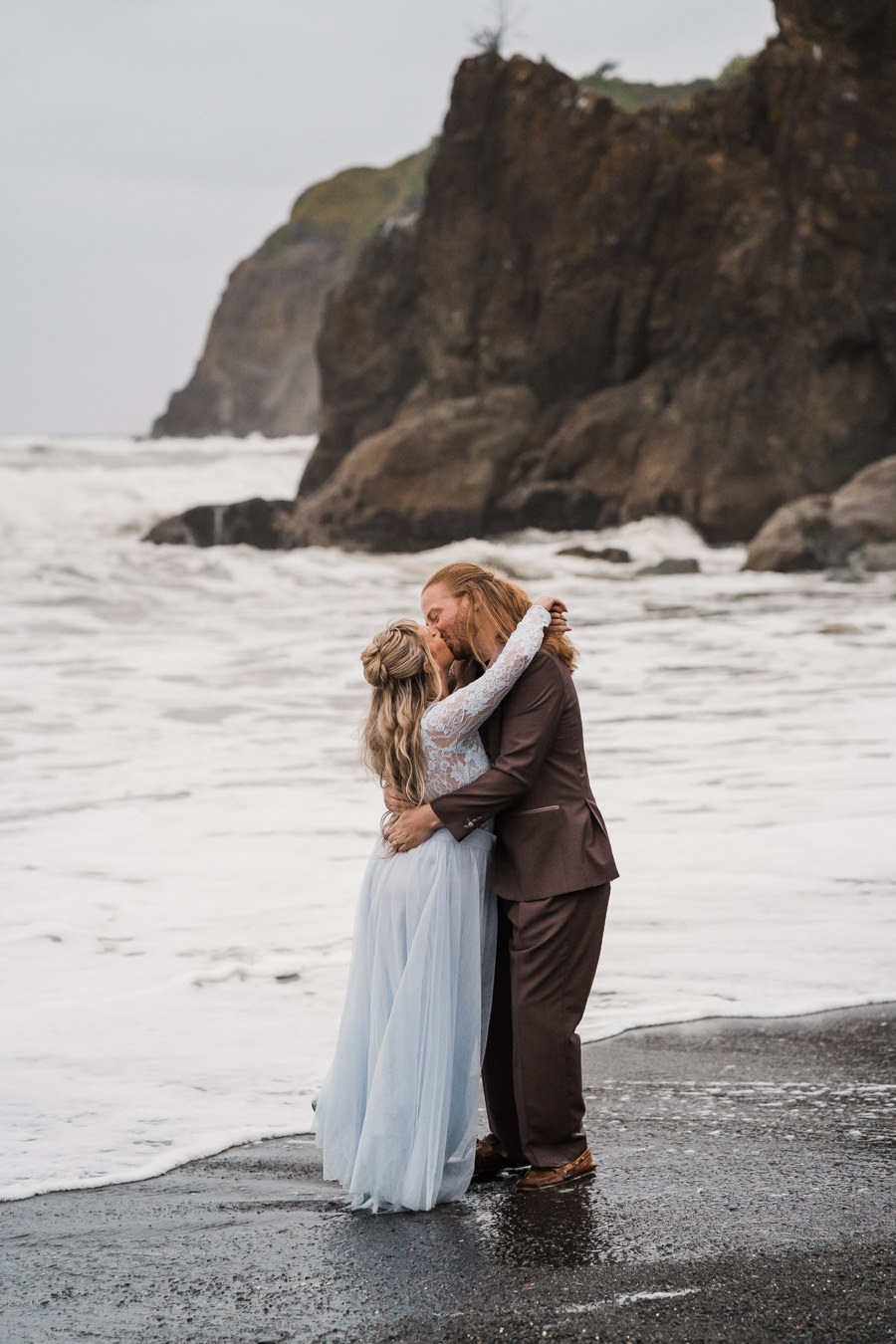
Spring Is Best for Couples Who…
Love waterfalls, forests, moss, cooler temperatures, and don’t mind a little weather. It’s also a fantastic season if your dream Olympic elopement looks more like rainforest + lake + waterfall or an epic spring ski tour.
Want to see a real spring elopement? Check out Stephanie & Kaylan’s adventurous elopement in Olympic National Park with guests for the perfect spring example.
Summer Elopements in Olympic National Park – June through August
What Summer Is Like
Summer gives you the most options, particularly if exploring the mountains is high on your list. By mid to late summer, snow has usually melted from many higher-elevation trails, mountain roads are open, days are wonderfully long, and you can build an elopement around everything from the coast to an alpine hike. June can still feel transitional, especially in the mountains, while July and August are much more reliably “summer.” July and August are also the park’s most popular months.
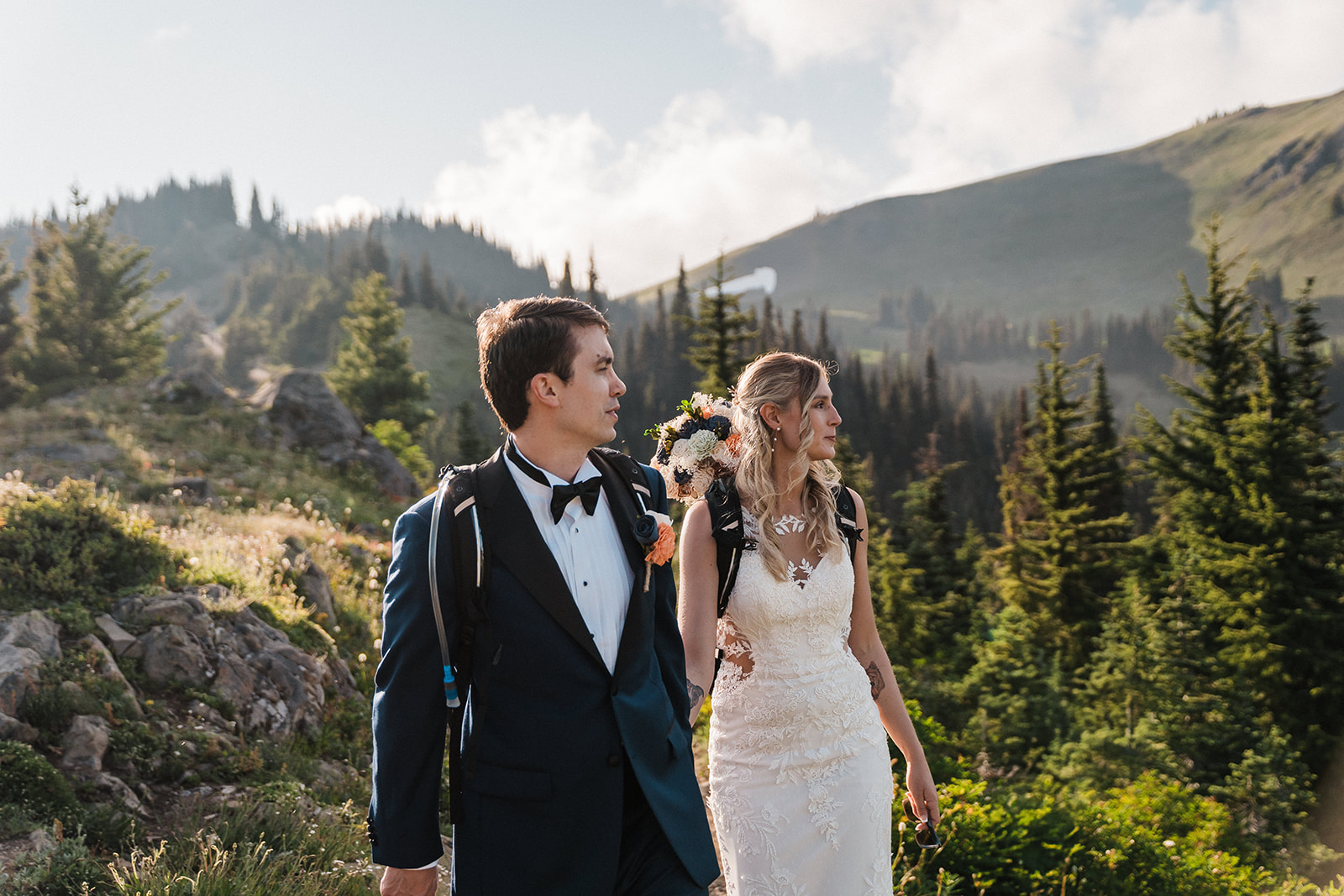
Best Summer Landscapes
This is prime time for the Olympic Mountains. If you’ve been dreaming about hiking through alpine meadows, watching sunset from a ridge, seeing wildflowers, or exploring some of Olympic’s higher-elevation trails, summer gives us the greatest number of possibilities. You can also combine those mountain landscapes with Lake Crescent, rainforest, waterfalls, or the coast to experience several completely different sides of the park.
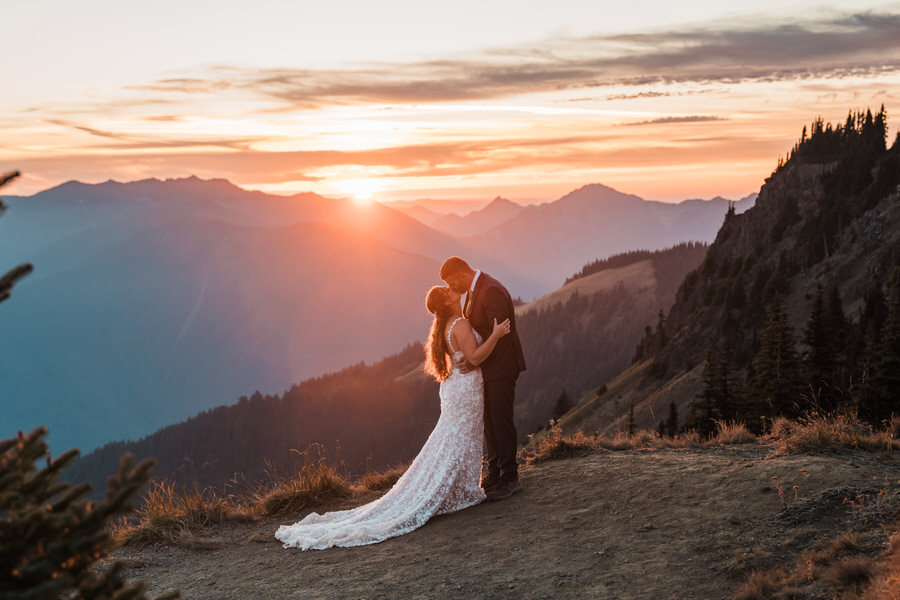
Summer Weather
July and August tend to bring mild to warm temperatures, but “summer” in Olympic doesn’t guarantee sunshine. Weather can still change quickly, temperatures vary significantly between the coast and mountains, and even a beautiful sunny day inland can mean fog along the coast. So yes, even for an August elopement, bring layers.

Summer Pros and Cons
The biggest advantage is access. If you want maximum flexibility with locations, long daylight hours, and the ability to plan a bigger hiking adventure, this is the easiest time of year to do it. The obvious downside is crowds. June, July, and August are the busiest months in areas like the Hoh Rain Forest, and popular destinations can have full parking lots and significant waits during peak hours. That doesn’t mean you can’t have a private-feeling summer elopement. It just makes thoughtful timing and location choices much more important. Sunrise, evenings, weekdays, and less obvious locations can completely change the experience.
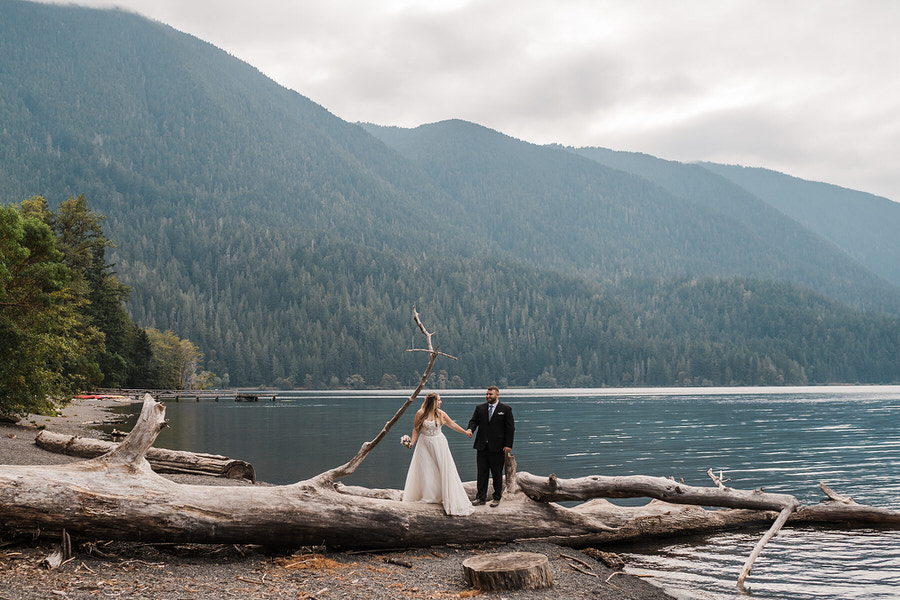
Summer Is Best for Couples Who…
Want to hike in the mountains, chase wildflowers, enjoy long days, or experience as many different Olympic landscapes as possible. If your dream wedding day involves hiking boots and sunset somewhere high in the mountains, I’d be looking particularly hard at July through September.
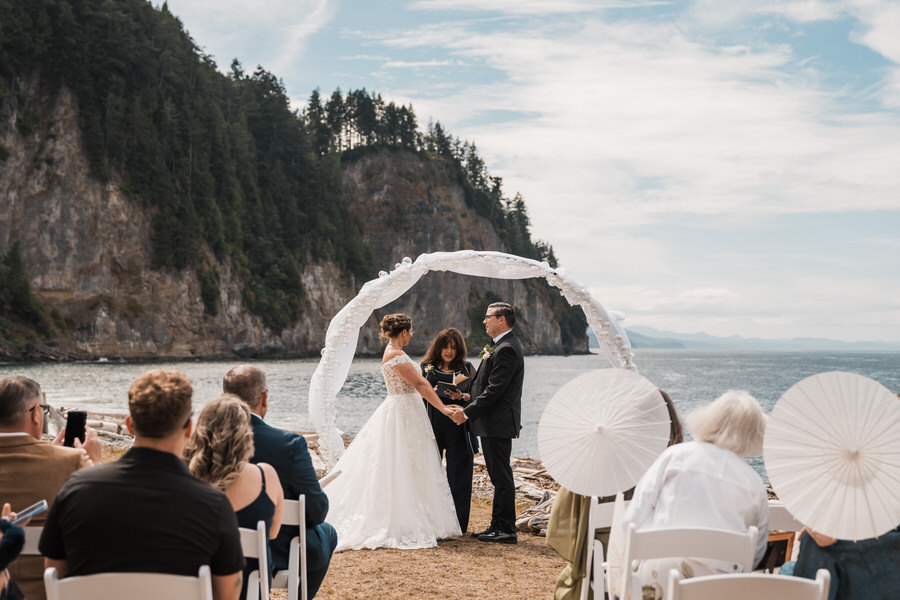
Want to see a truly epic summer elopement? Check out Ashley and Jeremy’s elopement, where they incorporated waterfalls, mountains, and forest all into one incredible experience.
Fall Elopements in Olympic National Park – September through November
What Fall is Like
Oh, fall. This might be Olympic’s most underrated season. September can still feel remarkably like summer, especially early in the month. The high country is often accessible, days are still long enough for adventures, and the biggest summer crowds begin to ease. Then the season starts changing quickly. Temperatures drop, precipitation increases, and the mountains can receive their first snow as early as late September. By late October, rain and wind become more common along the beaches, rainforest valleys, and other lower elevations.
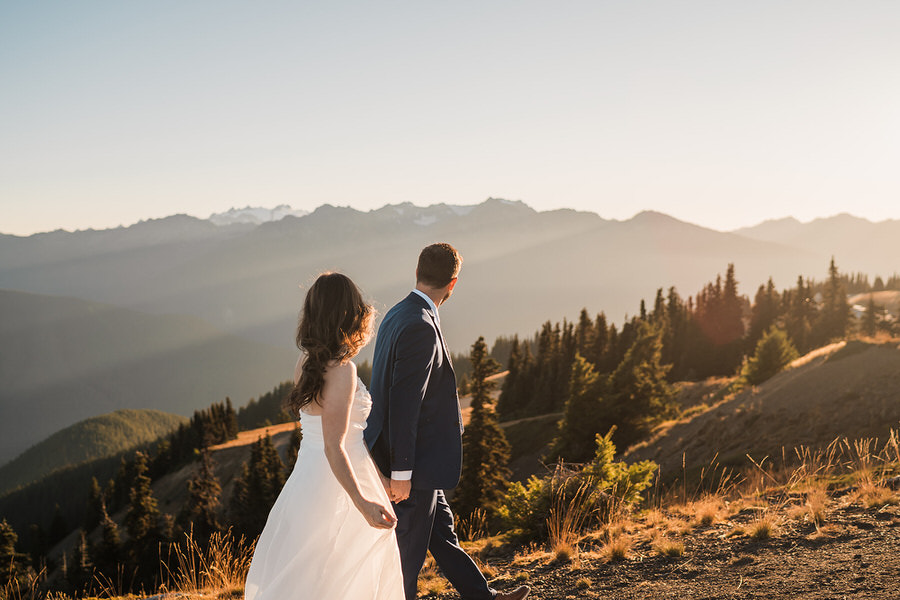
Best Fall Landscapes
Early fall can be incredible in the mountains, particularly as alpine vegetation starts changing color. It’s also a beautiful season around Lake Crescent and in the forests. As we get deeper into October and November, I start thinking more about forests, lakes, rivers, waterfalls, and the coast, with mountain locations becoming increasingly dependent on current conditions. This is when Olympic starts feeling wonderfully moody again.
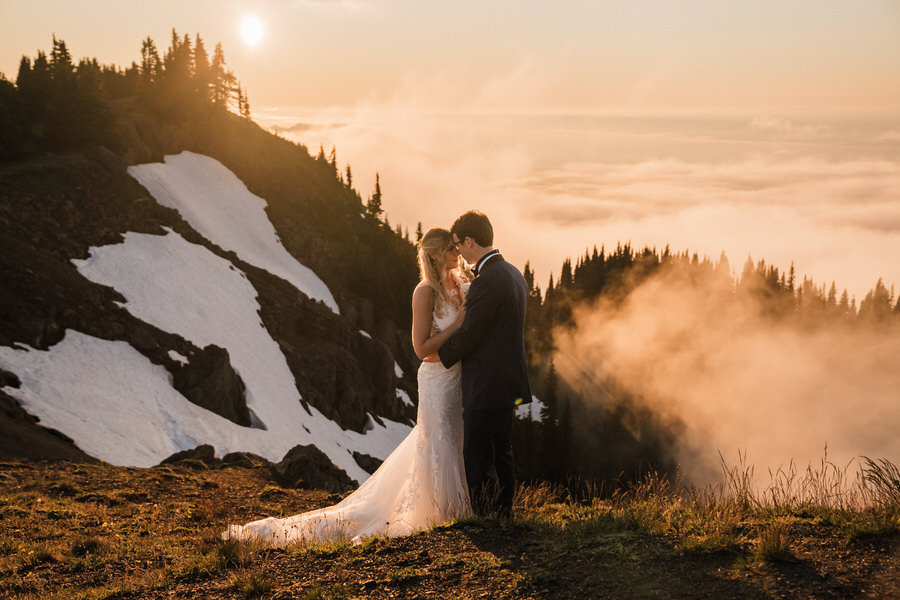
Fall Weather
September and November might technically both be “fall,” but they can feel like entirely different seasons here. September can bring gorgeous sunny hiking weather. By November, expect much cooler, wetter conditions and a significantly higher chance that winter weather will affect the mountains. Some seasonal roads, campgrounds, and facilities also begin closing as fall progresses, so later fall elopements need more flexibility built into their plans.
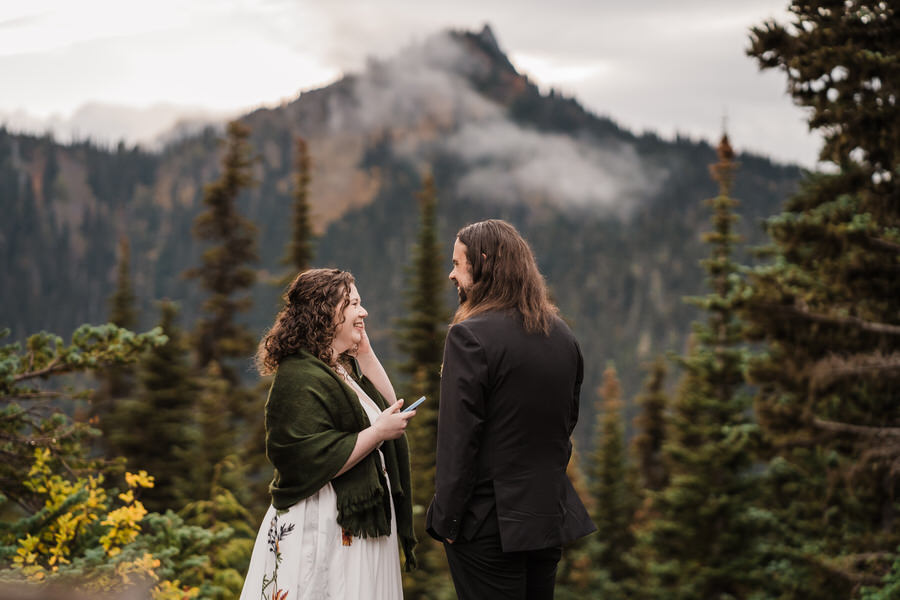
Fall Pros and Cons
Fall gives you fewer crowds, gorgeous seasonal color, and some of the most atmospheric conditions of the year. September in particular can be an amazing sweet spot between summer accessibility and fall atmosphere. The downside is increasing weather uncertainty as the season progresses. If you’re planning for October or November, I’d want you to genuinely like your backup plan rather than treating it as the disappointing alternative.
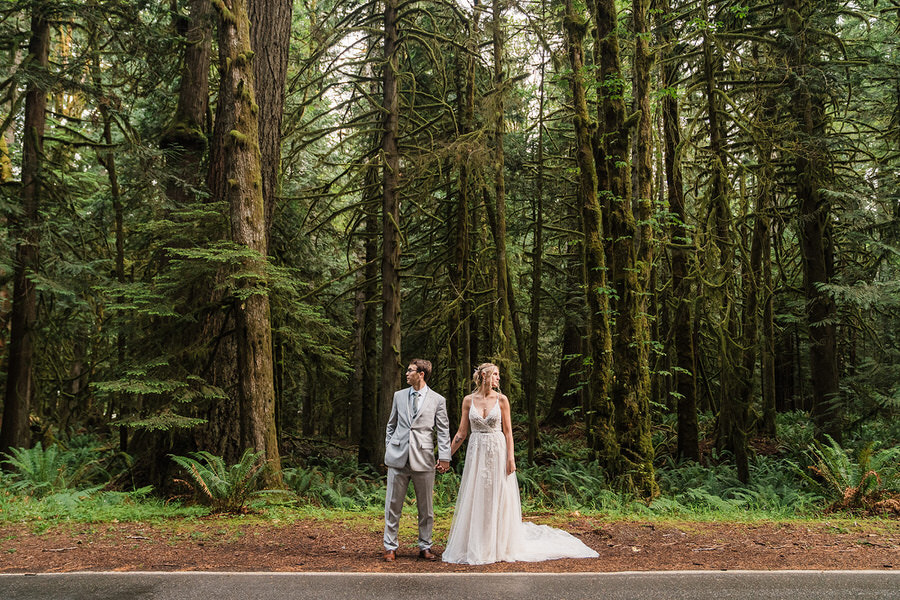
Fall Is Best for Couples Who…
Love changing colors, cooler weather, misty forests, fewer crowds, and a little unpredictability. It’s especially good for couples who aren’t chasing perfect sunshine and actually like the moodier side of the Pacific Northwest. If you’re seriously considering this season, I have an entire guide on How to Plan a Fall Elopement in Olympic National Park that dives much deeper into September, October, and November.
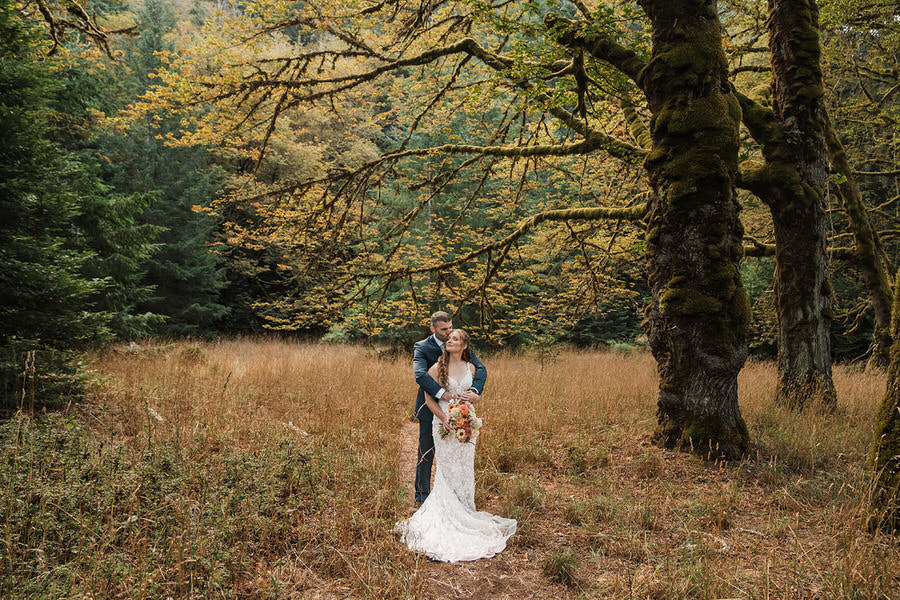
Want to see fall in action? Check out Cassandra & Dustin’s fall elopement in Olympic National Park.
Winter Elopements in Olympic National Park – December through February
What Winter is Like
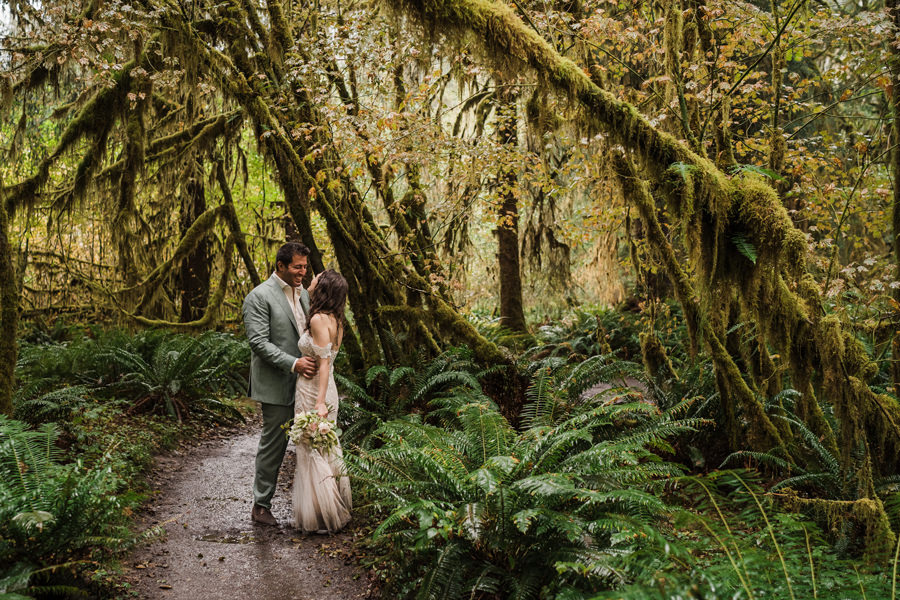
Winter is probably the season couples overlook the most, and it can be incredible if you go into it with the right expectations. At lower elevations, winter means rain, lush evergreen forests, moss, rushing rivers, waterfalls, and dramatic coastlines. Meanwhile, the mountains can be buried under snow. Hurricane Ridge receives an enormous amount of snow each winter, creating a completely different experience from the rest of the park. That means a winter Olympic elopement can potentially give you two very different worlds: snowy mountains and green rainforest.
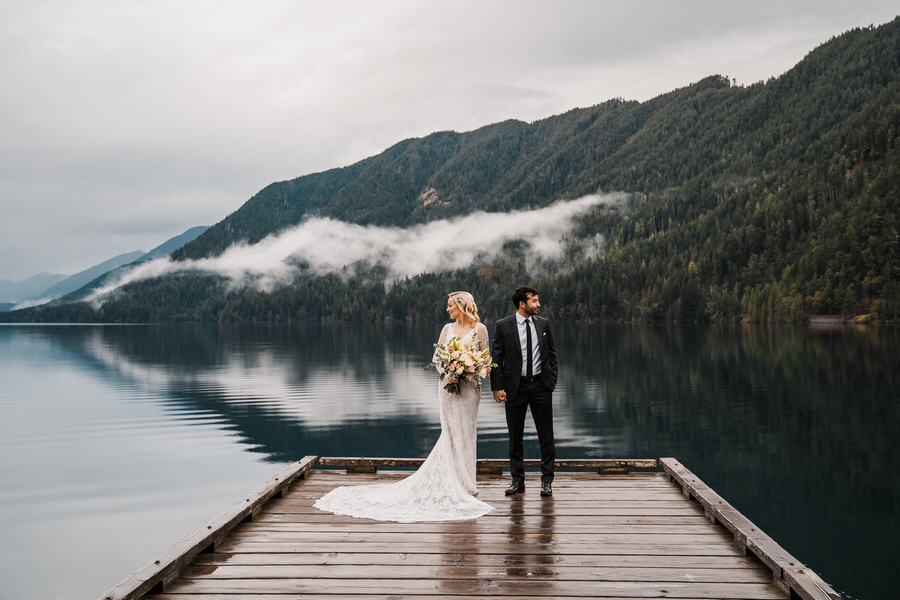
Best Winter Landscapes
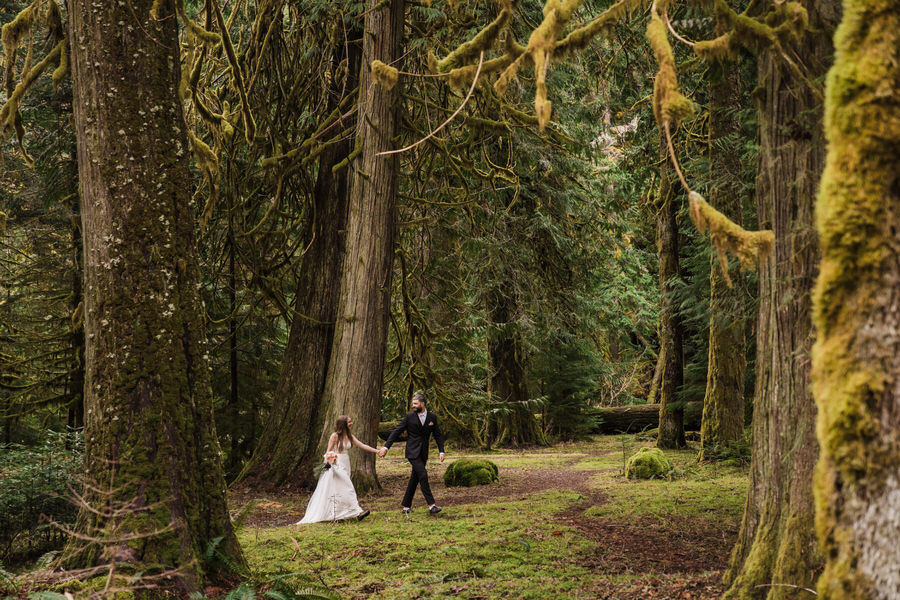
Think mossy forests, Lake Crescent, waterfalls, rainforest, rivers, and the coast. If conditions cooperate and you’re comfortable with winter travel, Hurricane Ridge can add a snowy mountain adventure. Winter is also fantastic if you’re drawn to dramatic weather rather than blue skies. Fog weaving through trees, storm clouds over the coast, and rain-soaked forests are very much part of the experience.
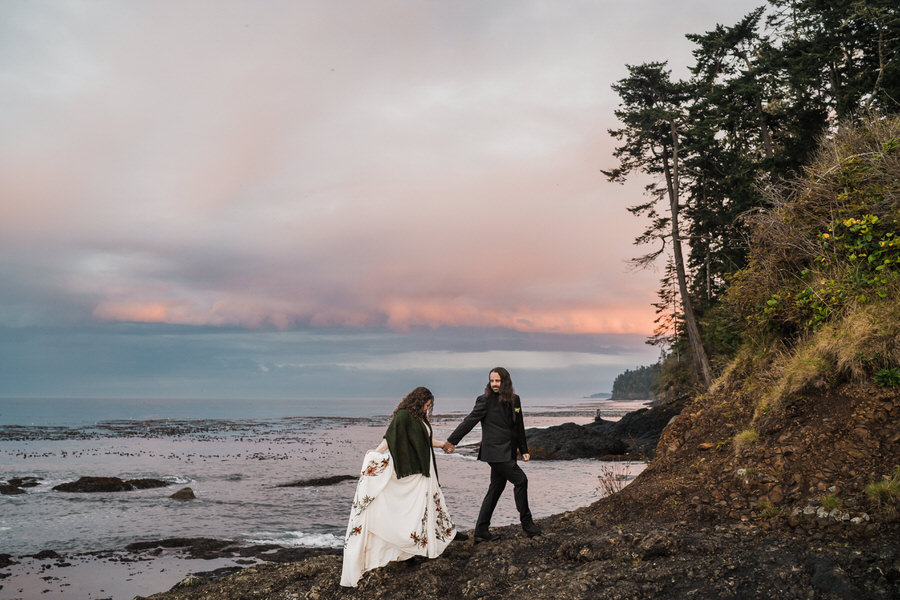
Winter Weather
Winter is Olympic’s wet season, with most precipitation along the rainforest and coast falling between November and April. At higher elevations, that precipitation falls as a LOT of snow. Mountain access requires extra flexibility. Hurricane Ridge Road’s winter schedule is limited and weather-dependent (the normal operating days are Friday-Sunday), and storms can delay or completely prevent the road from opening. Winter days are also short, which matters when we’re trying to fit multiple locations into an elopement timeline.
Winter Pros and Cons
The advantages? Far fewer visitors, gorgeous green forests, dramatic weather, snow, and a completely different version of Olympic than most people experience. The biggest downside is that we have less control over the plan. Mountain access can change, storms happen, daylight is limited, and some roads and facilities elsewhere in the park close or reduce operations during the winter. A winter elopement works best when you’re excited about the season itself rather than choosing it and hoping for sunny conditions.
Winter is best for couples who…
Love snow, rain, moss, dramatic landscapes, cozy vibes, and the idea of experiencing a completely different side of Olympic National Park. And if your idea of an elopement adventure involves actually getting out into the snow, this is a season I’m especially excited about. I’m an expert snowboarder and splitboarder with recreational Level 2 avalanche training, and I’d LOVE to photograph a couple who wants to make a backcountry tour or snowshoe adventure part of their elopement day. Imagine packing your wedding clothes into your backpack, heading out into the snowy mountains together, finding an incredible spot along the way to exchange vows and skiing fresh powder afterwards! Of course, winter backcountry travel comes with additional considerations. Conditions, avalanche forecasts, road access, weather, and the experience level of everyone involved would all factor into where we could safely go. For more technical objectives, I’d also want to bring in an appropriately qualified guide rather than treating photography or recreational avalanche training as a substitute for professional guiding. But for the right couple? A snowy Olympic adventure followed by a cozy evening back at your cabin sounds like a pretty incredible way to get married.
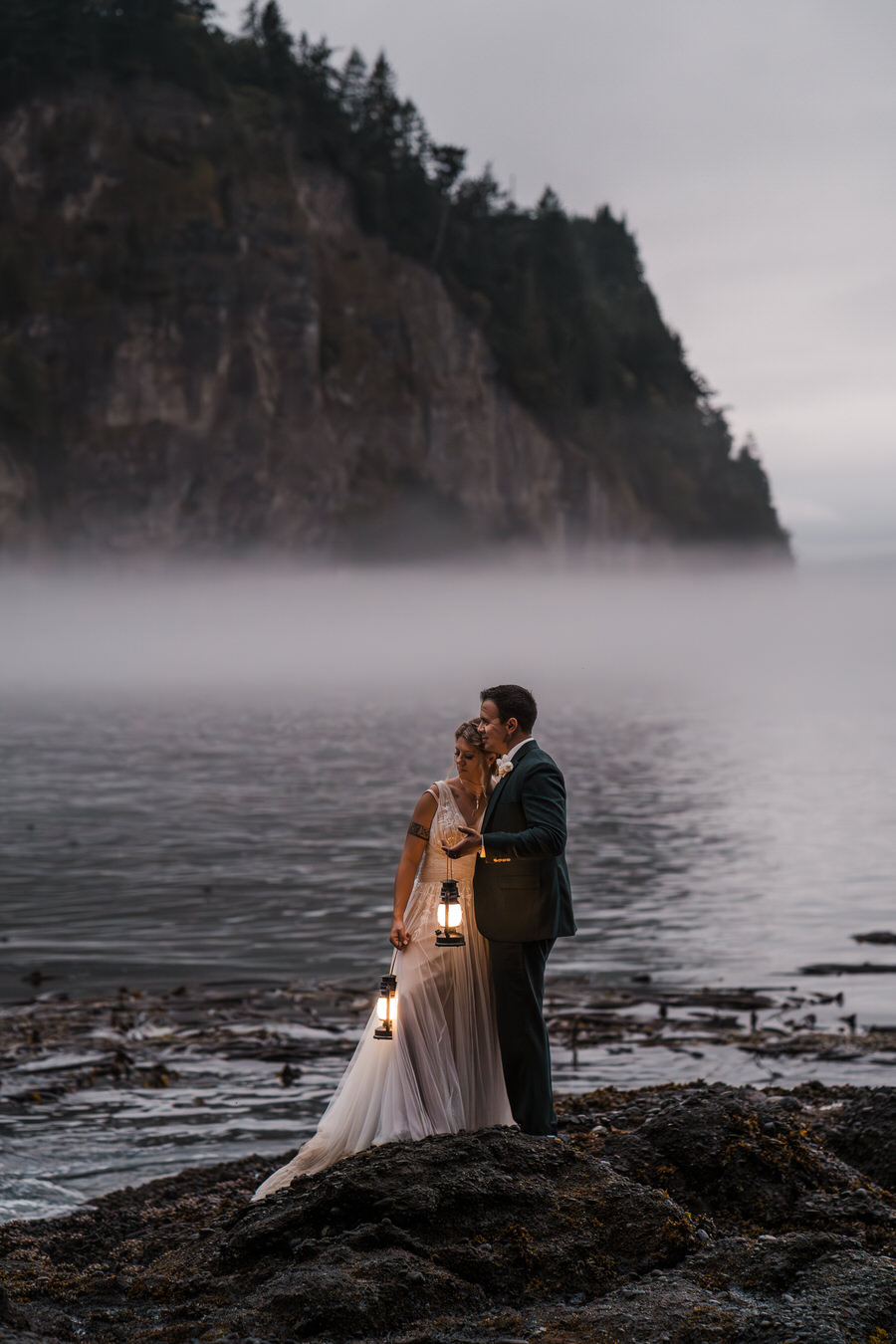
Check out Nyika & Omar’s Lake Crescent winter elopement for a beautiful example of what it’s like to elope in winter in Olympic National Park.
So…When Is the BEST Month to Elope in Olympic National Park?
It depends entirely on the experience you want.
That’s probably not the easy answer you were hoping for, but it’s the one I give my couples because choosing your date based on what you want to do makes so much more sense than simply picking the month with the highest chance of sunshine.
Want snowy mountains + mossy rainforest? Look at winter or early spring.
Want waterfalls + ridiculously green forests? Spring is hard to beat.
Want wildflowers + alpine hiking? July through September.
Want the most location options + longest days? July and August.
Want mountains but slightly fewer summer crowds? September is one of my favorites.
Want fall color + moodier weather? September and October.
Want misty forests + dramatic coastlines + fewer people? Late fall and winter.
And if you still have absolutely no idea? That’s okay too. Sometimes the easiest place to start is deciding what you want your wedding day to actually feel like.
Do you picture yourselves hiking high into the mountains? Walking through a dripping green rainforest? Exchanging vows beside a lake? Exploring the coast while waves crash against the sea stacks? Skiing powder in the mountains?
Start there. We can choose the season from that!
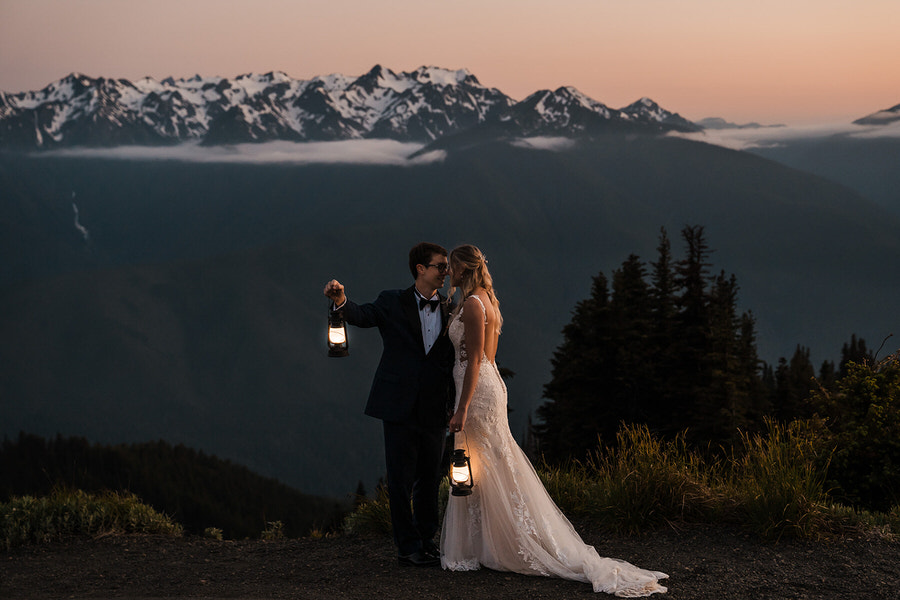
Planning an Olympic National Park Elopement?
One of my favorite parts of photographing elopements here is helping couples figure out exactly this. As a local Olympic National Park elopement photographer, I’m in the park throughout the year, and I help my couples choose locations, build timelines, navigate seasonal conditions, and create backup plans based around the kind of experience they actually want. You don’t need to know the perfect location, month, or timeline before you reach out. Tell me what you’re imagining, even if it’s as simple as “we want mountains and we don’t want to be hot” or “give us all the moss.” That’s more than enough to start planning something incredible.